

How Belbin Team Roles can support successful change and resilience
While considerable attention is often given to structures, governance and service design, successful transformation ultimately depends on people. In … Read more
How much do you remember? Have we missed anything?
Send us your memories, milestones and photos
Socitm – the Society of IT Managers – is formally established, with plans from the outset to create regional groups connecting IT leaders across local government. Its purpose is clear: to provide a professional home for people responsible for technology at a time when IT is becoming critical to council operations.

Source: Pexels
Groups (such as the Society of London IT Managers) emerge across Great Britain (Northern Ireland comes along in 2004), offering trusted local spaces for collaboration, sharing and strengthening community connections.
An early Viewdata service delivers real time information, highlighting an early commitment to digital communication and proactive information sharing.
A two-day meeting in Stratford-upon-Avon brings 58 members together to shape priorities, build relationships and establish Socitm’s initial leadership team and structure. Generating a profit of £989.30.
Mike Barkway is appointed the first Socitm Chairman, Bob Griffith becomes Secretary, John Keenan the Treasurer, and Harry Pearman is Membership. The annual subscription is £15.
The newsletter provides a consistent, accessible way for members to stay informed and connected across regions.
Martin Ferguson: Socitm’s first [typed] newsletter arrives, inviting applications for membership. After some debate about whether Socitm counts as a “professional association”, my Chief Executive finally scribbles a handwritten note to HR.
“Sock it ’em!! OK, by me.”
The £15 subscription is approved – money very well spent. By November, my membership application is approved – the start of a journey that would shape my career.
Socitm launches its first Statistical Information Service – the origin of the annual IT Trends survey.
A detailed questionnaire is sent to every local authority IT Manager, with analysis undertaken by a University of Warwick MSc student, culminating in the first published report.
Covering infrastructure, applications, skills and costs, IT Trends quickly becomes an essential benchmark – providing evidence and insight where little has existed before. It marks Socitm’s emergence as a trusted voice on public sector technology.
Ahead of the introduction of the Community Charge (Poll Tax), Socitm surveys councils to assess the IT impact. The findings are stark:
The challenge goes far beyond billing systems, requiring complex integration with Housing Benefits, Cash Receipting and other core services. At St Albans City & District Council, the IT budget doubles overnight to cope with storage and processing demands – a sign of transformation underway.
A pilot scheme has been introduced in Scotland and the Scottish members in the society (notably Tim Dawes) are able to report on the major problems that are starting to arise as individuals seek to have their names removed from the Electoral Register. It has become obvious that the whole process is flawed.
IT Trends shows local government IT spend has risen 19% in a single year to £884m. The Community Charge alone accounts for £166m annually, while concerns grow about supplier readiness and system quality.

Source: Unsplash
This new partnership gives practitioners access to global research and independent insight, supporting more informed decision making.
Relationships start to grow internationally, enabling members to learn from peers worldwide and broaden their understanding of digital practice.
Kate Mountain represents the society at an international ALGIS (Academy of Local Government Information Sciences) conference in Denmark and makes the case for attending such overseas events in future so that Socitm can increase its influence globally.
Socitm challenges an Audit Commission claim that only a third of councils have an IT strategy.
Working with the commission, Socitm data shows 70% of councils have a documented strategy – outperforming many private sector organisations.
Socitm launches MAPIT (Management and Provision of IT) at a special event in Taunton, Somerset. Initially forecast to attract 50 subscribers, MAPIT rapidly exceeds expectations and becomes a cornerstone of Socitm’s offer.
As Compulsory Competitive Tendering looms, Socitm partners with CIPFA to establish a Competition Advisory Service.
This provides coordinated responses to government proposals and practical guidance for councils navigating a changing procurement landscape.
Title and role of Chairman becomes President with a badge and chain still in use today. The annual subscription rises to £25, and The Management and Provision of IT (MAPIT) research programme is created to identify and promote good IS/IT management practice in local government.
Establishing an annual moment to celebrate contribution, the first President’s dinner strengthens relationships and recognises collective achievement.
Number of members exceeds 400 for the first time.
Socitm becomes the Society of IT Management, reflecting its growing strategic role. Plans follow to broaden membership, revise subscriptions, engage paid officials and establish a trading arm – Socitm Services Ltd.
Socitm explores the use of email with the Association of District Councils. What begins as an experiment will soon transform how the society communicates and collaborates.

Source: Pexels
A formal application for charitable status is denied by the Inland Revenue. It will take another 30 years (of irregular effort) to be granted.
MAPIT outputs include a technology report with Gartner, IS/IT strategy guidance and service definitions.
MAPIT now has 112 subscribers, proving the value of member-led innovation.
Two desks, a large photocopier (donated by Rank Xerox) and a franking machine are managed by Linda Griffith. All the material for meetings, minutes, reports, publicity and so on are sent out by post as electronic communication doesn’t exist on a commercial basis.
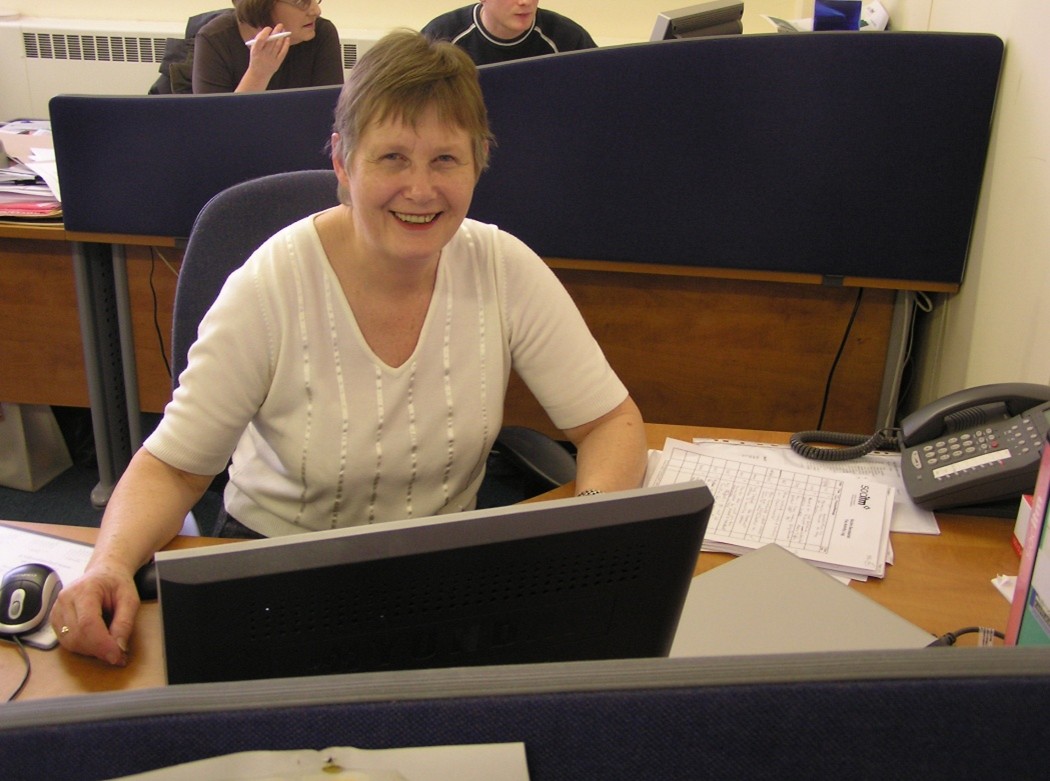
Source: Bob Griffith
In memoriam: Linda Griffith (21 March 1944 – 23 April 2009) was an indispensable part of the society, who placed her own stamp on many areas of Socitm’s work, always adopting a conscientious and welcoming attitude.
A dedicated trading arm is created to deliver insight, consultancy and events sustainably and with a strong member focus.
As the internet reshapes public expectations, Socitm supports members adopting websites and early online services. The focus shifts from internal systems to outward-facing delivery.

Source: Wayback Machine
Membership and activity expands beyond traditional IT management. Technology is becoming transformational, not just operational.
The Y2K/Millennium Bug software problem is raised for the first time. A few years later in 1998, it will be referred to as “The Millennium Software Bomb” on the Socitm website.

Source: Wikimedia Commons
Socitm’s own website is set up on Pipex – the UK’s first commercial ISP. The website enables faster communication, online access to resources and a move toward digital-first engagement.
Socitm’s first training services are set up by Tim Dawes (Havant Borough Council).
A practitioner led consulting service begins offering tailored advice to help councils and public bodies improve outcomes through technology.
A highlight from the conference report – IT managers must get more skilled at dealing with the office politics:
“IT Managers in local government are not effective at getting their message across according to Socitm, and as a result IT is not getting a fair share of resources. Even though it is accepted that most IT staff are employed for their ‘technical know-how’ they also need to be political wheeler dealers to win support for more IT investment. Almost all sectors are reporting growth in IT spending but Socitm’s own trends survey shows that spending in real terms in local government is on the decline.
Too many IT managers try to put the blame for under investment at the door of elected members, but the truth is that IT managers do not put forward a strong enough business case to win support from other colleagues to get more money spent on IT. This was the conclusion of a lively debate at this year’s Socitm conference. The IT manager of the future must be a politician first and a technician second.”
Brian Westcott (Cheshire County Council) starts leading the training initiative and working on a Training Needs Analysis.
A new strategic group forms to explore digital government, emerging technologies and standards, strengthening the organisation’s policy voice.
Originally named Reinventing Local Government (RILG) it later evolves into Socitm Information Age Government (SIAG).
Throughout 1999 and the following years, national work on licensing, procurement and standards shapes digital policy, creates fairer practices and unlocks significant savings for the sector.
The first of a number of study tours between 1999 and 2000 gives members first hand exposure to global digital innovation and new approaches to leadership and service design.
Paper copies of guidelines to manage the change from 1999 to 2000 in older IT systems are created for and by members.
National e-government programmes place digital delivery at the heart of reform. Socitm helps councils interpret policy, sharing learning and turning ambition into practice.
Attention moves from individual systems to joined-up services and citizen experience. Leadership, strategy and delivery at scale come to the fore.
Someone (was it you?) calculates that the office is dealing with 8,000 phone calls and sending more than 13,000 emails (fast-forward to 2025, and that number becomes 70,000+ emails!).
Socitm Training becomes Socitm Learning and offers a growing number of courses under the leadership of Chris Head and Mark Wheatley.
Courses expand with new management and leadership programmes to build skills across digital, data and technology roles.
A new governance model strengthens accountability and member voice through modernised structures and clearer shared decision making.
The Suppliers Forum is created to improve the focus on and relationships with commercial partners whose presence was increasing at meetings.
Socitm Northern Ireland is created. Socitm’s reach is finally UK-wide with 1,764 members.

Structured CPD-certified pathways and enhanced learning routes start to support practitioners’ professional growth and help them adapt to evolving digital demands.
A collaborative Open Source Academy supports councils in exploring open, cost effective technologies that enable more flexible and efficient services.
As CIO roles matures, Socitm strengthens its support for leaders operating at board level. Peer networks become spaces for challenge, confidence and collective problem-solving.
Building on IT Trends, Socitm continues to provide insight and comparative data to support evidence-based decision-making.
The cost of attending Socitm learning course is greatly reduced. The price paid by organisations employing a Socitm member is £156 per seat for most one-day courses.
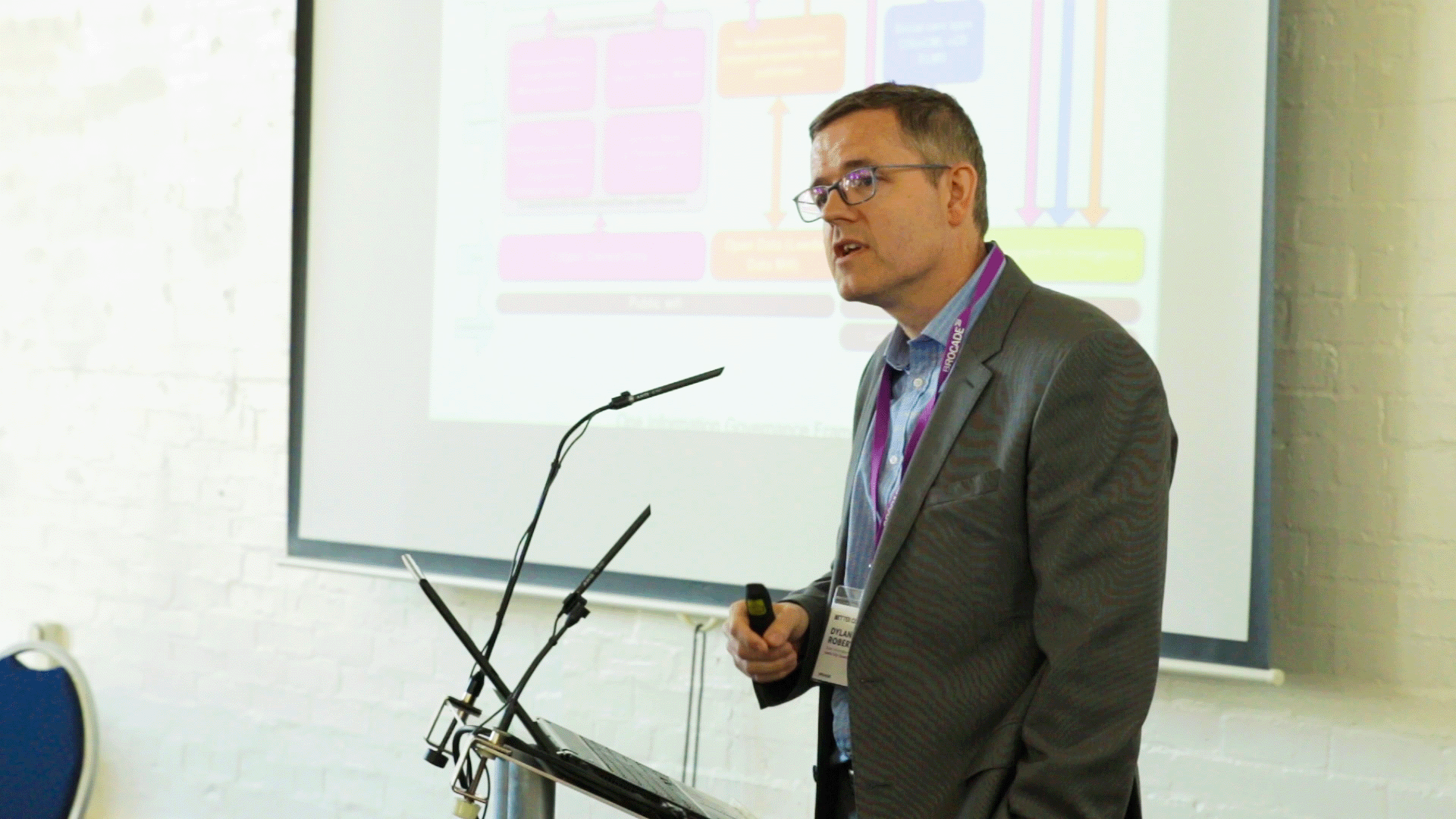
Dylan Roberts, Chief ICT Officer at Leeds City Council, takes over from Glyn Evans as chair of Socitm’s IT strategy and policy-generating body, Socitm Futures.
Socitm President Jos Creese is one of the most influential technology leaders in the UK – second only to government CIO John Suffolk – according to the CIO50 list published annually by silicon.com.

Sustained financial pressure reshape local government. Socitm supports collaboration, shared services and smarter use of technology and data.
Technology is increasingly seen as an enabler of place, not just organisations. Socitm’s focus evolves to reflect systems, partnerships and communities.
Socitm’s annual conference celebrates the society’s 25th birthday, with Dr Martin Reeves, Chief Executive of Coventry City Council, opening as plenary speaker on day one of the event.
Top Talent (with IBM) runs for the first time.
Digital, data, user-centred design and agile working become central to reform. Socitm adapts its offer to reflect this broader skillset and mindset.
Members increasingly look to one another for proven approaches. Socitm strengthens its role as a convenor of best practice.
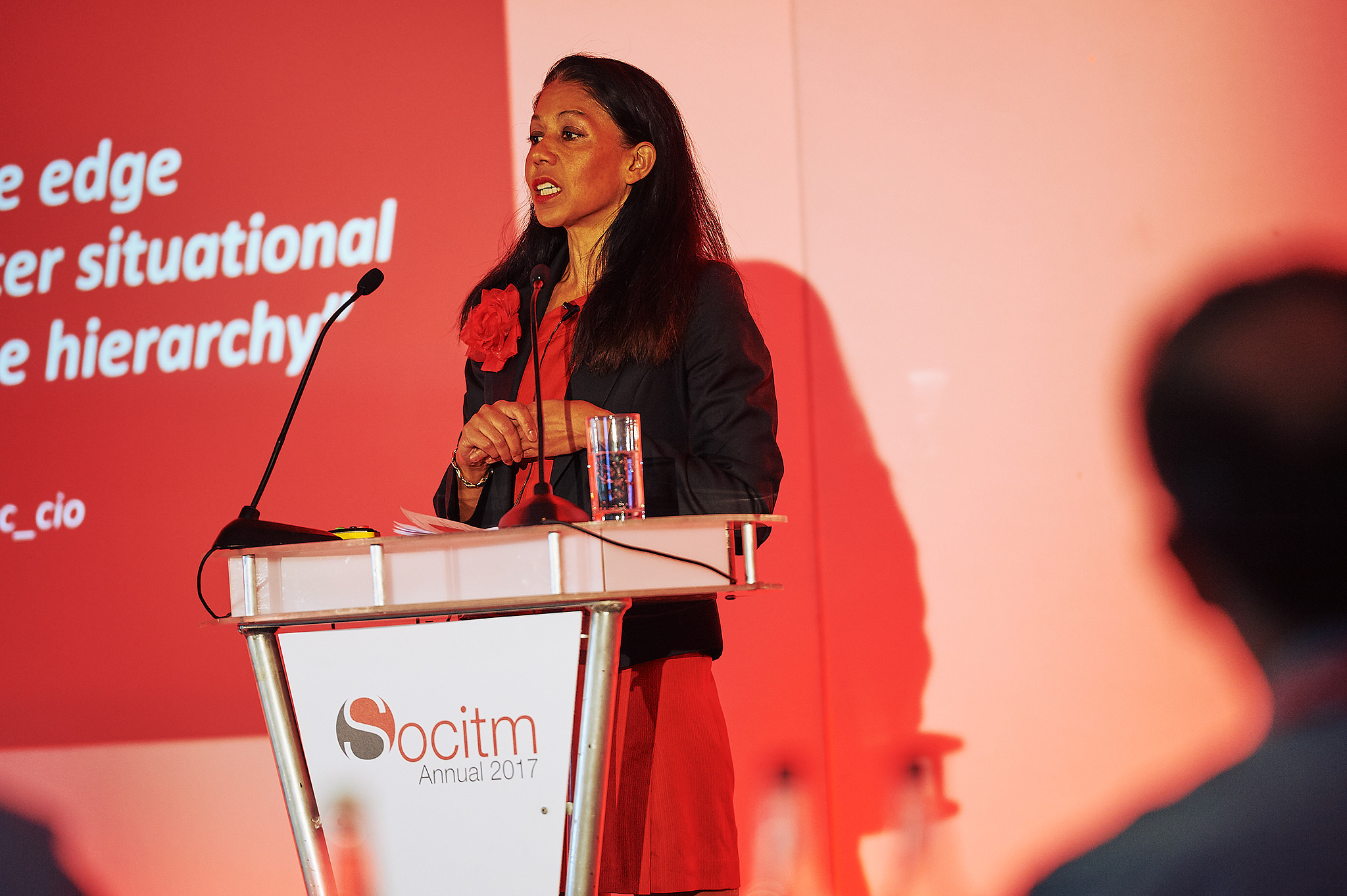
Covid-19 accelerates digital delivery and new ways of working almost overnight. Socitm supports members through rapid change and sustained pressure.
What once took years happens in weeks – demonstrating what is possible when barriers are removed.
Socitm gains charitable status, formalising its purpose: improving public outcomes through technology, data and collaboration. Purpose, not profit, sits at the heart of the organisation.
Focus sharpens on people – the workforce, leaders and communities – and on place-based outcomes. Technology is treated as a means, not the end.
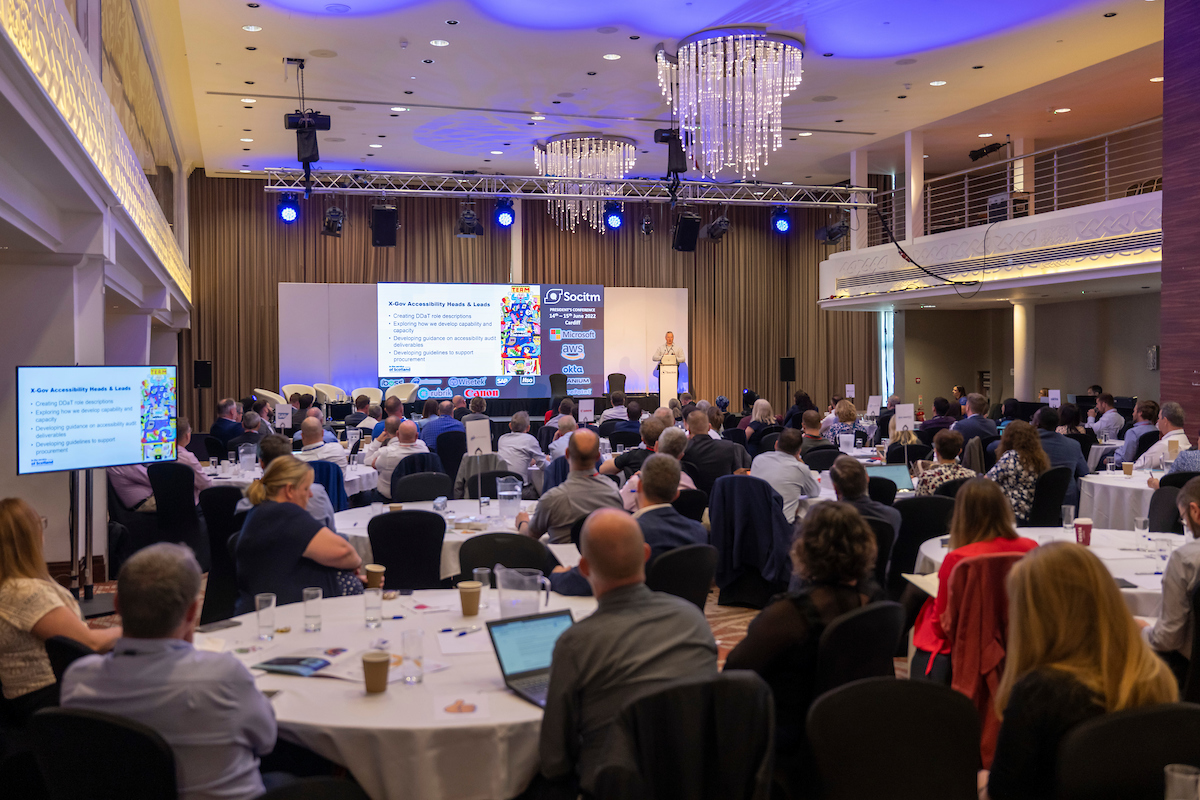
Source: Matt Horwood
AI, cyber security, climate risk and skills shortages are reshaping the landscape once again.
Socitm continues to provide trusted space for learning, collaboration and practical progress.
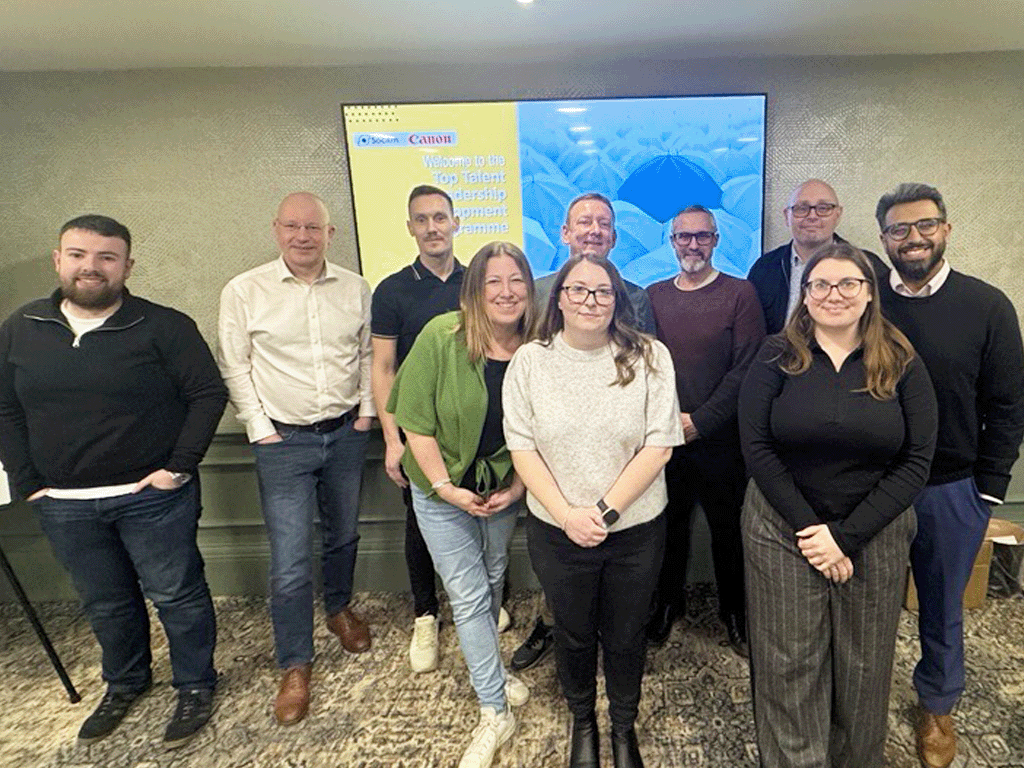
From IT managers to digital and data leaders, Socitm’s story is one of adaptation, community and shared purpose.
The next chapter will be written, as ever, by its members.

Source: Anastasia Jobson
Latest resources
While considerable attention is often given to structures, governance and service design, successful transformation ultimately depends on people. In … Read more
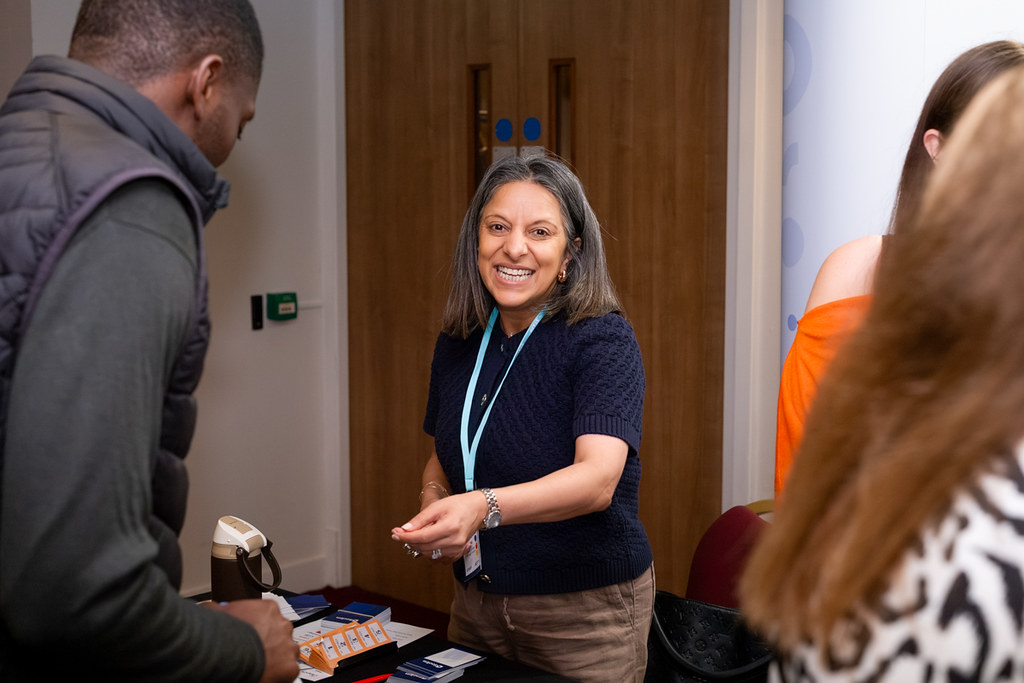
How did September pass by so quickly?! It’s been a busy month of conversations and events and meetings. But … Read more
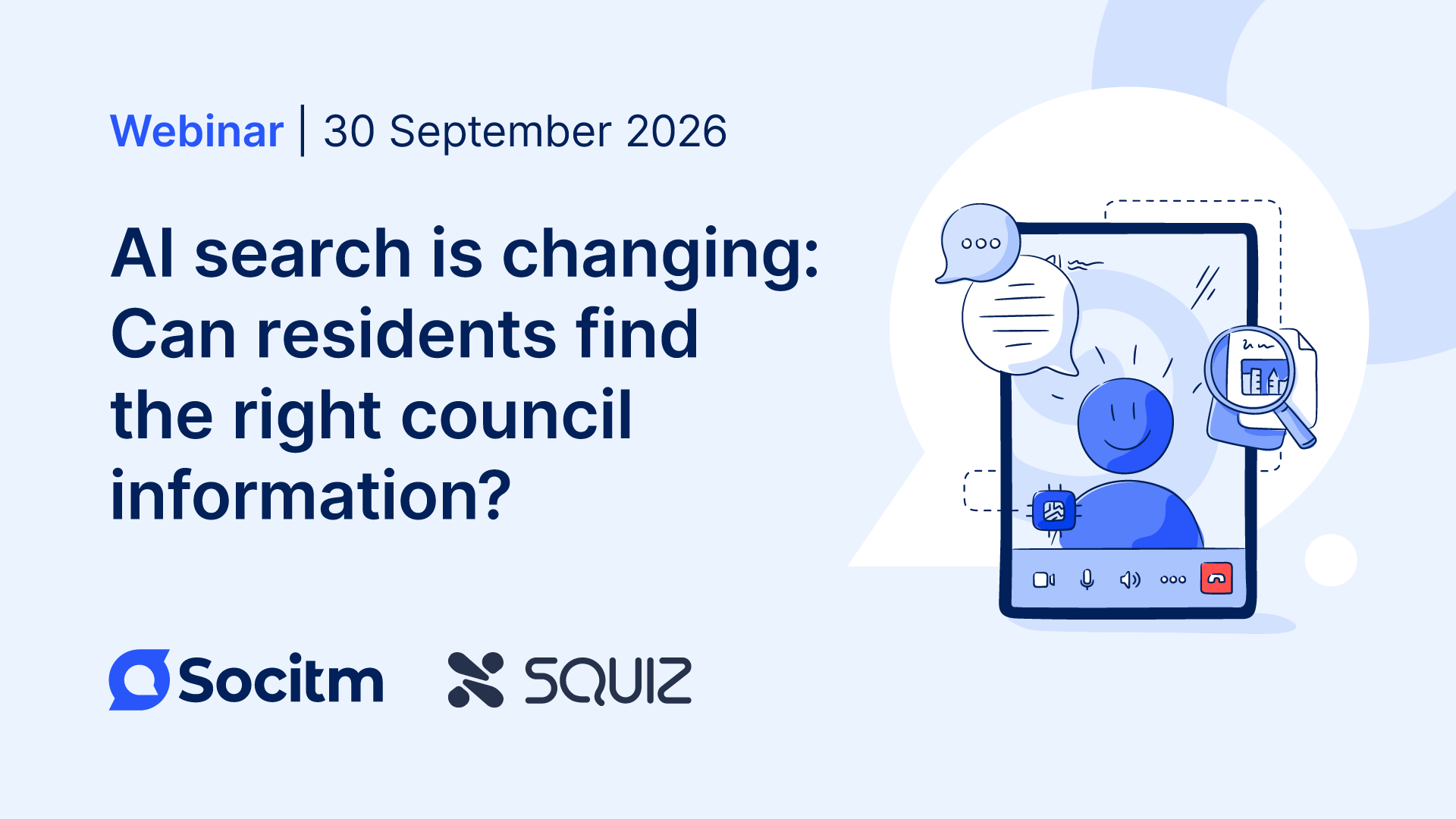
Search is fundamentally changing. Generative AI tools and answer engines are quickly becoming a primary way residents and staff … Read more
Local government leadership and leaders are moving from command and control to connect and convene Our local public services … Read more
This session is designed for local government organisations looking to understand more about the cyber threat landscape and how … Read more