JUMP TO SECTION
Day one: MHCLG pilots Local Transcribe service | Councils need to fix foundations or see innovation fail | Welsh security service handles more than 200,000 incidents over two years | South Staffordshire moves to cloud finance ahead of LGR | Top Talent groups stress human side of security | Day one in brief | Socitm 40th anniversay quiz
Day two: Essex to equip LGR successors with new devices | AI is changing how people search and write | Empowering Women groups tackle digital exclusion | Day two in brief
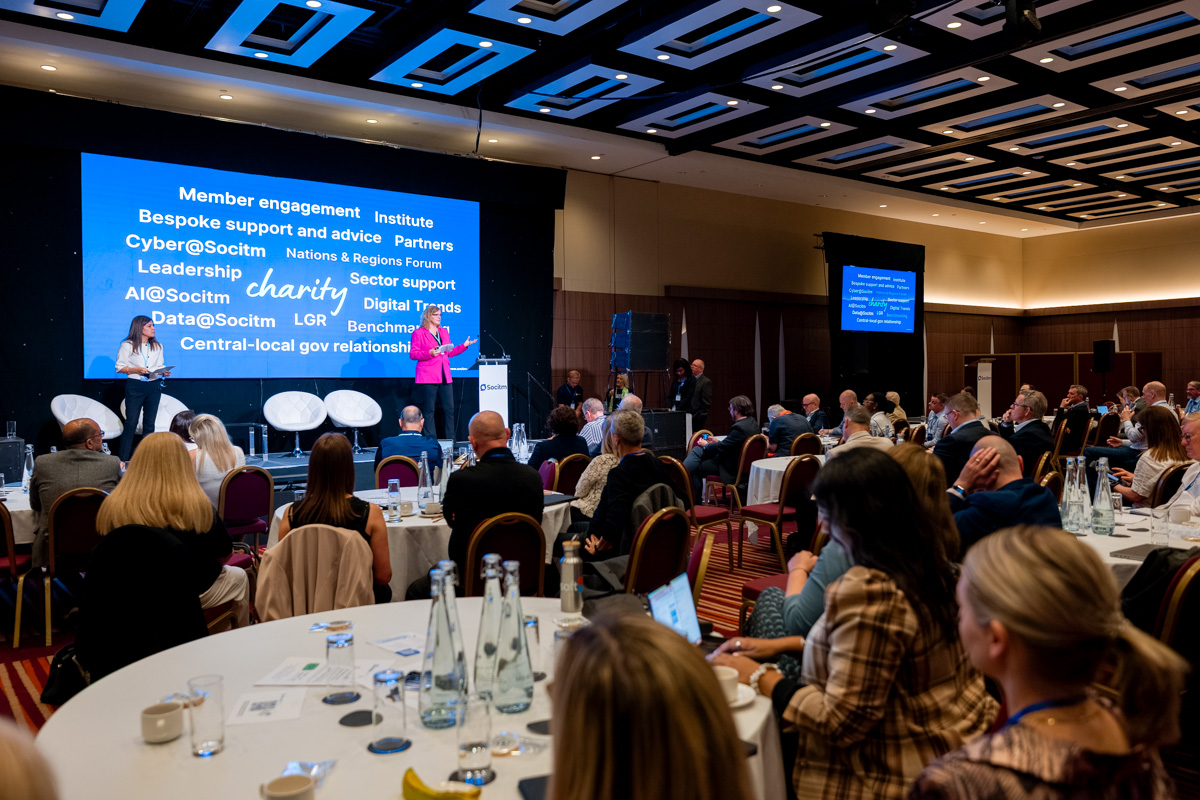
🗓️ President’s Conference day one

MHCLG pilots Local Transcribe service
The Ministry for Housing, Communities and Local Government (MHCLG) is piloting an artificial intelligence transcription system for use in local authorities with 500 officers in housing and homelessness services.
Local Transcribe builds on Minute, a tool used in central government, and Justice Transcribe, used in courts and tribunals. It turns recordings into accurate transcripts and generates standardised summaries that staff can check before approval.
“It’s a core component, it’s reused everywhere,” Tom Smith, MHCLG’s director for AI, said of transcription services at Socitm’s President’s Conference in London on 9 June. “Because this is a common tool there is a really strong rationale and business case for a central government central service.” Doing this would help to reduce fragmented adoption, duplicated spending and vendor lock-in, he added.
The ministry has also built Extract, a tool that converts historical planning documents into structured data usable by geographical information systems, which is available to local planning authorities through gov.uk email addresses. Smith said it can even capture handwritten annotations. It also continues to support the sector’s cyber resilience through the Local Digital Programme.
Smith said that central government also wants to support local government in scaling up the use of technologies including AI, adding that some authorities are already “at the forefront of innovation” and it makes sense to spread this good practice.
“Central government is really up for supporting local services,” Smith said, adding: “Please come and talk.”
Speaker slides: Tom Smith (MHCLG) presentation
Councils need to fix foundations or see innovation fail

New systems may be ignored by staff if they don’t address basic problems such as poor wifi, devices and data quality, Rehana Ramesh, Hackney Council’s director of ICT, digital and customer services told the event. “If you don’t have the right foundations with the technology right and the data standards right, no matter what shiny object you bring in to sit on top of it, it is not going to give you the answers,” she said.
She said that when working for another local authority it spent £200,000 and 18 months building a data lake to provide a single view of each child it served. But on its first day in operation just three members of staff used it, two by accident. “They said they couldn’t trust the data,” Ramesh said, instead preferring to access information from the underlying systems.
In the same session, Nathan Pierce, director of Essex Digital Service at Essex County Council, said that some local authorities only had the capacity to deliver the bare minimum of statutory services and many are heading that way. But residents expect them to act as placemakers as well as local delivery arms of central government: “We are almost set up to fail,” he said.
Pierce said that local government reorganisation (LGR) may enable some change but he added that it “doesn’t solve these problems, it changes the shape of these problems”. He said that rather than LGR being the equivalent of building on a greenfield site, it is more like trying to complete the renovation of an old château in France to a short deadline without being able to speak French.
Welsh security service handles more than 200,000 incidents over two years

CymruSOC, the security operations centre for Welsh local public services, has dealt with more than 200,000 incidents since going live in May 2024 with nearly half of incidents taking place outside normal business hours.
Ryan James, chief information security officer for Merthyr Tydfil Council, told a break-out session that the outsourced service from Socura provided round-the-clock coverage that individual authorities could not deliver themselves. If the council had tried to set it up in-house, “we would still be there now trying to get it work,” he said.
Merthyr Tydfil is the contracting authority for the service, with the Welsh Government providing leadership and funding for all of Wales’ local authorities and fire and rescue services. CymruSOC works with the existing security technologies used by organisations rather than insisting on standardisation.
Nigel Howarth, head of partners and alliances for Socura, said that the supplier has discussed providing similar shared services to areas served by combined authorities in England as well as Greater London. He added that the company shares information on threats with the rest of the public sector, including through the National Cyber Security Centre.
James said that he and colleagues spent two years planning the procurement, a process which could have been completed quicker if they had involved the Crown Commercial Service, now the Government Commercial Agency, at an earlier stage.
Mark Brett, a Socitm associate cyber security and resilience advisor, added that Wales had an advantage when establishing CymruSOC as it already enjoyed high levels of trust between those working on security in the country’s local public services. This had been developed through the Cymru WARP, Socitm Cymru relationships and further enhanced by Wales having retained and developed its national PSBA Data Network.
South Staffordshire moves to cloud finance ahead of LGR

South Staffordshire District Council is about to go live with a new cloud-based finance system, despite being likely to merge with neighbours under LGR in less than two years’ time.
Andy Hoare, assistant director of business transformation and digital technology, said the council’s existing on-premise finance system has had its last update from the supplier. “I wouldn’t fancy trying to migrate an unsupported finance system into LGR,” he told a break-out session. “Doing nothing is not a risk mitigation.”
The government is yet to announce its LGR plans for Staffordshire, but all the options proposed by local authorities involve South Staffordshire merging with neighbouring authorities. “Waiting feels safe, but you are giving yourself a false sense of security,” Hoare said. He established a five-person project team to manage the move to the new OneAdvanced finance system, which will take place later this month.
Hoare said that system fragmentation could be a real challenge for many of the local authorities those going through LGR, particularly given that many areas will have less than two years between knowing the shape of the reorganisation and their vesting day on 1 April 2028.
Top Talent groups stress human side of security
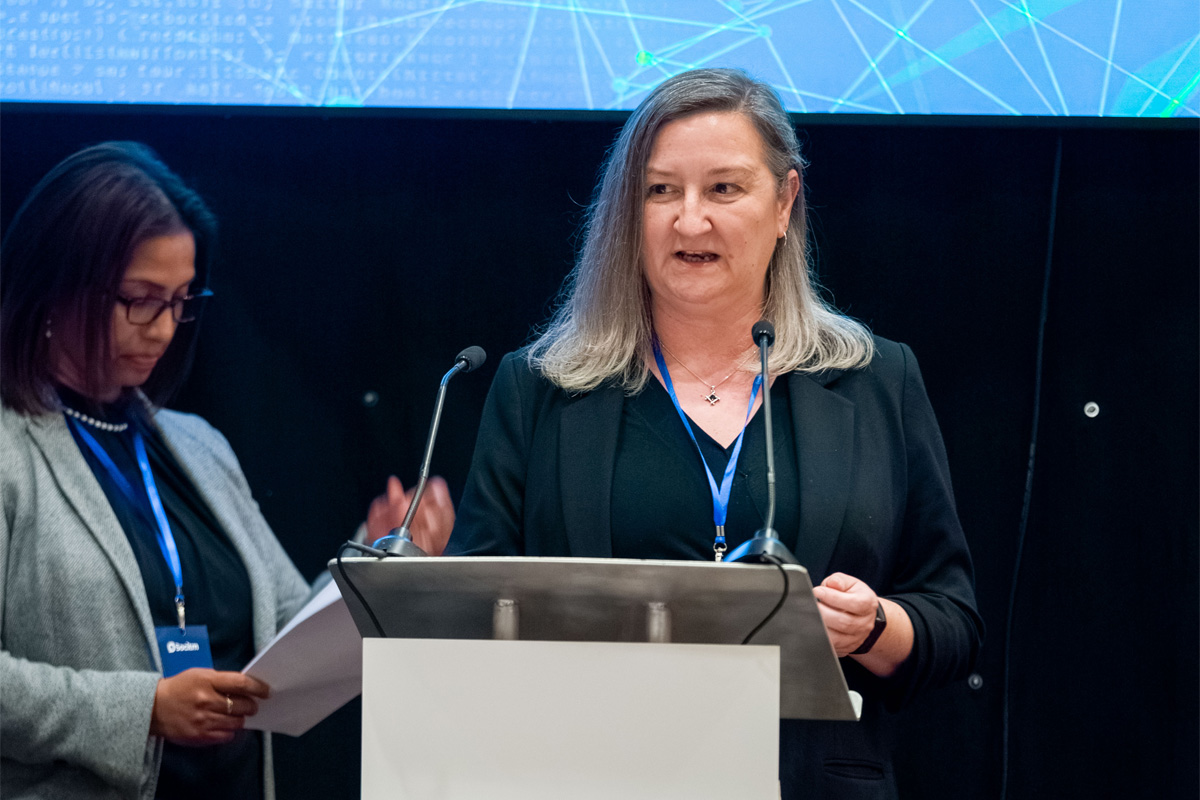
Two Socitm Top Talent groups presented their findings on how councils can develop their cyber security capabilities, with both stressing the importance of involving staff in preparations and reporting problems. “We need to remove the fear factor around, ‘what if I’ve got it wrong,” particularly for non-IT workers, said Saleta Vilaz-Paz of Barnet Council. Training can include comparisons with physical security, where people know to report suspicious bags in public places rather than open them: “Instead of bag, think email. If it doesn’t look right, don’t open it, get the right people to check,” she added.
The second group outlined ‘Dave’s Monday Meltdown’, a situation where someone clicks on an apparently-official email then enters his log-in details, encrypting the organisation’s finance files. “We face a more complex cyber security challenge than most commercial organisations. We safeguard some of the most sensitive data for some of the most vulnerable people in our society,” said Chris Wood of Peterborough City Council. He added that public services are legally required to disclose what they are doing: “That creates a constant balancing act between protection and making data and what we do with it accessible and transparent.”
Speaker slides: First group presentation; Second group presentation
📌 Day one in brief

Local authorities should make their websites their definitive source of information then use AI to repurpose their contents for other digital channels, Simon Fletcher, chief executive of Lichfield District Council in Staffordshire, told a panel session. “It shouldn’t just be a publishing channel, it should be a knowledge base for the whole council,” he said. At present, Lichfield residents and businesses are likely to get slightly different answers depending on whether they use the website, WhatsApp – an increasingly important channel for the council that made up 14% of all transactions in 2024/25 – or talk to a member of staff. Fletcher said that a website providing a single source of truth and shared AI will help with LGR as it will help authorities combine services with greater ease.
Research shows that the public have expectations of local authorities that differ from the government’s, Mo Baines, chief executive of the Association for Public Service Excellence, said in a panel session. “They want places that are nice to go to eat, they want good public realm like parks, they want better wages in the local economy and help with home energy costs,” she said, while the government is focused on LGR and developing specific industries in specific locations. Sam Trendall, editor of PublicTechnology, added that councils can support their citizens by working to reduce digital exclusion, something that Exeter City Council has done well: “For many of the most vulnerable people, digital inclusion would mean greater independence and easier access to support both from the state and other resources,” he said.

Socitm chief executive Nadira Hussain told a session on the 40th anniversary of the society that its membership has changed a lot since 1986. “Sad to say, Socitm started as quite a cliquey, closed, very male-dominated environment,” she said. When first attending a regional Socitm event in the late 1990s, “I walked into the room and didn’t see many people that looked like me. I have been on a mission with the team to ensure that we are diverse, inclusive and reflective of the people that we serve,” she said.
🤔 Socitm at 40 quiz
Attendees took part in the following quiz on Socitm’s history, with two people winning prizes for scoring eight out of 10.
Socitm 40th Anniversary Quiz
🗓️ President’s Conference day two
Essex to equip LGR successors with new devices
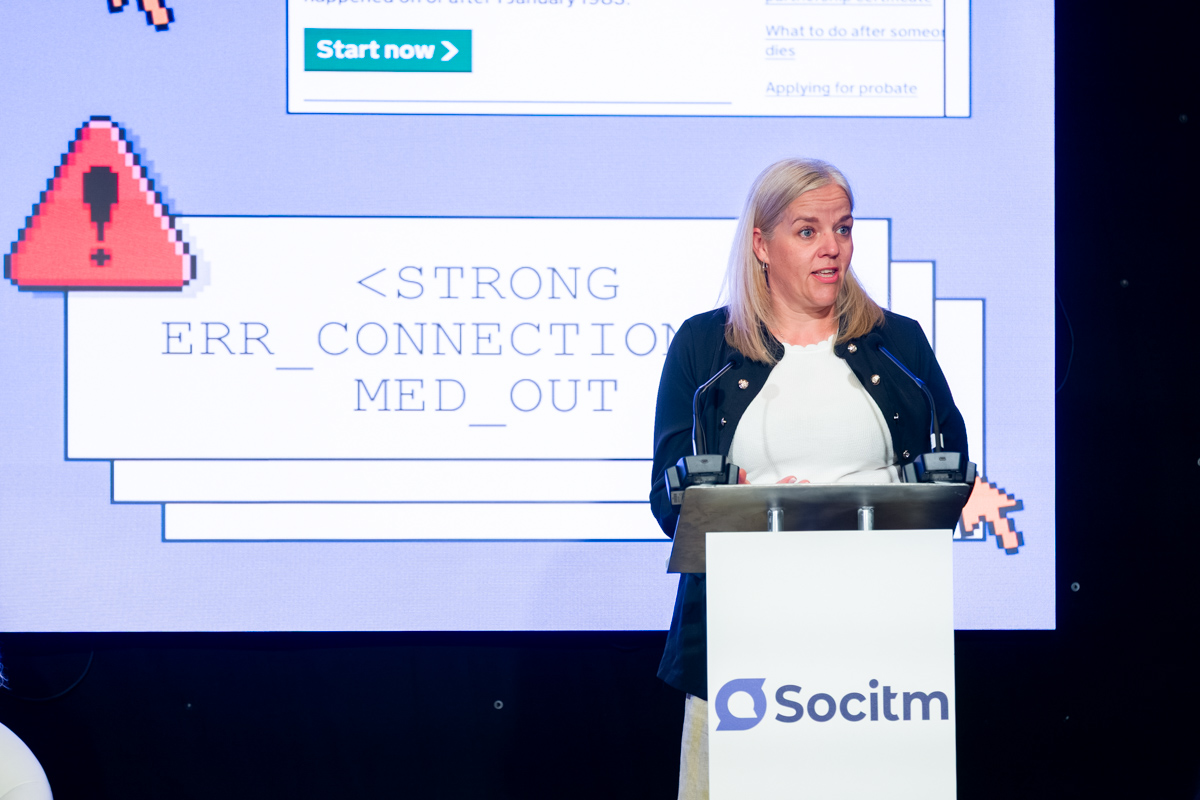
Essex County Council will replace most of of its laptops and desktops before its LGR vesting date, so that successor unitary authorities will not need to replace these for two years, its assistant director for operations and platform told a panel session on day two of the conference.
Emma Toublic said that LGR would be difficult but also presented “a great opportunity to us to reset things”. Providing successor authorities with stable technology foundations including new devices will make reorganisation easier, such as by allowing staff to use AI tools: “If you give someone a really basic computer, they aren’t going to be able to take advantage of these technologies,” she said.
Essex County Council manages around 8,000 laptops and 700 desktop computers, mostly from Dell, and expects to replace around two-thirds of them before its expected vesting day on 1 April 2028. Toublic added that the county is looking at better ways to decide when to replace computer hardware than how many years it has been in service, such as number of log-ins, meaning that a heavily-used laptop would be replaced sooner than a lightly-used one.
AI is changing how people search and write

Organisations need to consider how AI processes their content as people increasingly rely on AI to summarise material and process their own writing, according to two speakers at a session on future leaders.
Elizabeth Arnott, a senior web designer and developer for Kirklees Council, said that organisations need to learn how to write for AI summarisation rather than just search engine optimisation as at present. She added that council staff are increasingly keen to make their content more accessible in a range of ways: “It’s not just about meeting regulations, it’s about making sure residents can conclude transactions and find information online without any barriers,” she said.
Rosie Scott, a university student and data ambassador for Newham Council, discussed how she uses AI tools including Google’s Gemini to help her write. “Everything I write on LinkedIn is my own words, but I use Gemini to make a little bit more professional and easier to understand and gets rid of all the filler words,” she said.
Speaker slides: Elizabeth Arnott (Kirklees Council) presentation
Empowering Women groups tackle digital exclusion
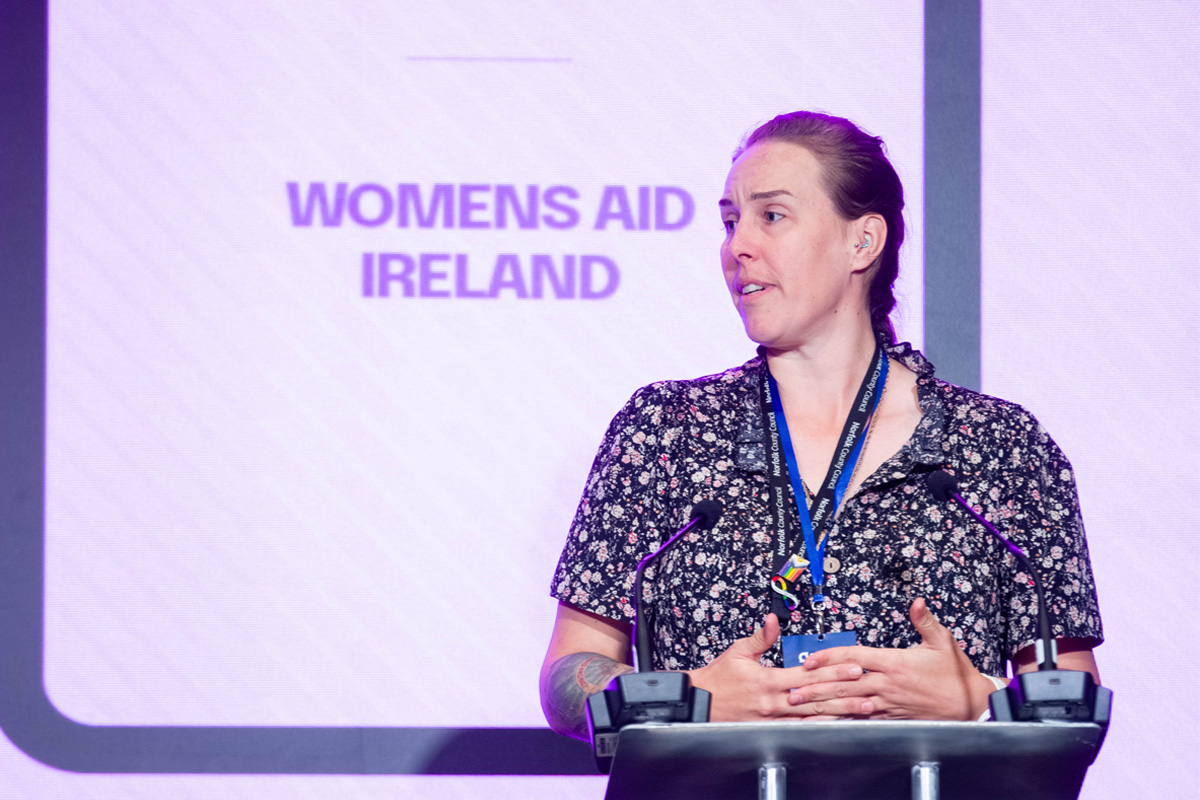
Two groups from Socitm’s Empowering Women course presented proposals on improving support for women in using digital technologies. The first group focused on older women, who are particularly likely to be digitally excluded, in some cases giving up on using online services because design changes make familiar tasks newly difficult. “It quietly locks people out of the lives they are entitled to live,” said Essex County Council’s Emma Toublic. The group produced an online checklist on how to help older users, which advises organisations not to hide actions within abstract icons such as three line ‘hamburgers’, not to require the use of mobile apps and not impose time limits. The checklist also recommends that designers should avoid making users feel they have done something wrong when they hit difficulties, instead providing guidance and support telephone numbers when this happens.
The other group produced a specification for an app that would tackle many women’s fears over online safety, including through personalised advice. They pointed to research suggesting that one in three women in the UK have experienced abuse on the internet. “What was once a space for connection is now a space to approach cautiously or avoid entirely,” said Hannah Edwards of Norfolk County Council.
Speaker slides: Team Elevate presentation; Team Unstoppable presentation
📌 Day two in brief

AI is unlikely to take over from humans in the workplace but will lead to significant changes, Gary McAllister, European public sector chief technology officer at Dell, told the event. “AI is really bad at understanding empathy and human interaction, so humans are needed for that,” he said. Instead it is best used in joining up systems so it can augment work by people. McAllister said that doing so will require organisations to understand their data, prepare it for use by AI and then carry out rigorous testing to support AI training.
Research suggests that smart city initiatives that focus on the technology tended to fall flat, Jennifer Schooling, professor of digital innovation and smart places at Anglia Ruskin University. “The key thing is to put front and centre the outcomes you are trying to achieve,” she told a panel session, then consider what technological tools to use. Oliver Bruff, a researcher at the Ada Lovelace Institute, said that its research has found big differences in how much work humans supposedly ‘in the loop’ for AI transcription put in, with some social workers just cutting and pasting transcriptions and others spending a long time on checking.
📷 More photos from the conference can be viewed online at Socitm’s Flickr account