Why connecting two systems doesn’t necessarily join up a service
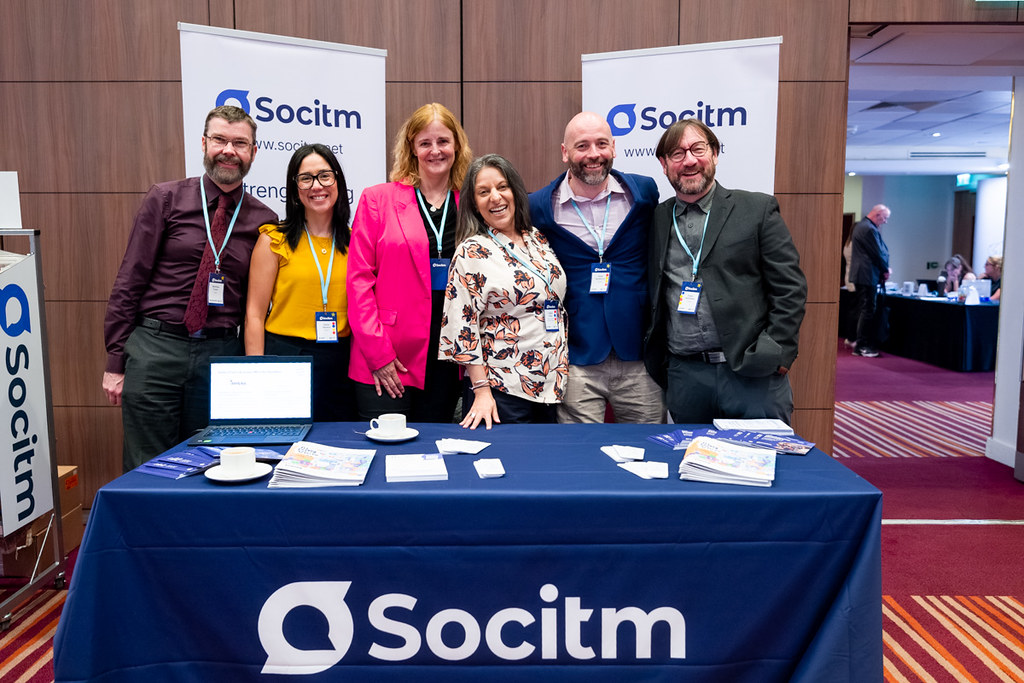
The following insights were gathered during a Socitm panel discussion of local government tech leaders and representatives from Civica, entitled ‘From fragmented systems to joined-up services: Making composable transformation achievable in local government.’
Around 6.8 million people move house within the UK every single year.
Each house move, on average, requires between 5 and 8 interactions between residents and local councils – rising to 10+ for social housing and more complex scenarios.
This statistic, gathered from research conducted by Civica in partnership with Inner Circle, helps to illustrate a common, critical challenge in local government today.
- For residents, a single life event – moving house – carries the burden of having to repeat information across several different channels to update records held by the council.
- For councils, demand is multiplied when changes need to be made across a number of separate, siloed systems, despite all the data relating to the same resident.
Ultimately, it’s a story about the inefficiency of fragmented council systems and the inability to have a single view of the resident.
The cost of fragmented services
Civica’s research goes deeper.
Across all contacts, the number one reason for people getting in touch with their council is not to make a complaint or provide new details. It’s to check progress on something that’s already been reported.
📌 This is failure demand. Contact created when a service doesn’t get something right the first time around, or when it doesn’t tell people what’s happening.
One London borough found that 42% of housing repair calls over a ten-day period were repeat calls. People weren’t reporting new issues. They were simply trying to find out what was going on. Those additional calls totalled 33,002; calls that could have been avoided altogether if an effective feedback loop was in play.
The impact from disconnected council systems carries significant financial cost. According to the research, the estimated cost to local authorities of responding to preventable issues is upwards of £17 billion every year.
But the cost isn’t only financial.
When housing, revenues and social care each hold a separate piece of a resident’s story, it’s unlikely anyone will be able to spot the kinds of pattern that could signal a household approaching crisis: rent arrears building, repairs reported but unresolved, a missed appointment.
📌 Without a joined-up view, councils may miss opportunities for an early intervention before issues escalate.
Making composability work for local government
Councils are being asked to deliver joined-up, proactive services while running on decades of accumulated systems, contracts and workarounds. However, the usual answer of rip-and-replace transformation is simply not affordable in time, risk or budget for local authorities.
What if the path forward isn’t replacing what’s there but instead connecting it?
The private sector moved away from large, all-encompassing ERP systems designed to centralise and manage all core operational processes because it became evident that no single solution could fit every use case, especially when trying to build competitive advantage.
Sometimes a specific tool is needed for a specific job.
This is where composability comes in
Composability is a modular approach where specialist tools perform particular tasks.

They're all joined up using APIs, a type of software interface that enables different software systems to communicate with one another.

It creates a common layer where data can be exchanged easily between components.

Processes can be refined, piece by piece, and they are connected from end to end.
📌 For councils working with constrained budgets, composability offers a practical way to make incremental change without the disruption or capital outlay of a full re-platform.
The shared data layer offers a way to build that single view of the resident. One where they only need to contact their council once to tell them they are moving house.
Composability in a local government context, however, comes with its own set of constraints that go beyond those faced by private enterprises:
- Procurement cycles.
- Legacy contracts.
- Political accountability.
- Limited resources.
The sector has distinctive objectives too.
A council isn’t looking to outperform a competitor through the aggregated efficiencies of its tech stack. It’s trying to
- Build joined-up resident journeys.
- Deliver more proactive services.
- Enable better-informed staff.
- Make decisions based on insights into residents’ needs.
From connected systems to joined-up services
The difficulty when using different tools for different jobs is that it can constrain how data moves around an organisation.
Already, years of legacy decisions have left many councils with data of uneven quality, and many service owners are reluctant to leave any of it behind.
📌 The real question in a composable approach isn’t whether there’s perfect, consistent data. It’s what data needs to move, where, and when to improve the resident experience.
Connecting two systems technically doesn’t necessarily join up a service.
A request can be passed from a web form to a back-office system, and the integration can be a technical success, yet the resident is still left wondering what’s happening.
There needs to be a two-way exchange of information where back-office systems can send progress updates back up the chain as well.
Making those updates visible at the front door, via whichever channel the resident has used, is going to reduce failure demand.
But that’s just one step.
Identifying where such connections will make the most difference to residents requires joining up a journey from the entry point all the way through to the desired outcome, with data being exchanged across systems. Precisely the benefit of a composable approach.
Transforming one step at a time
Large-scale transformation rarely happens in one go.
The more reliable route is a series of small changes that demonstrably work.
Each success makes it easier for others to follow, and over time it shifts the culture. When asked for something big, breaking it into stepping stones keeps it achievable, and keeps the organisation agile enough to take up new opportunities as technology moves on.
The 6.8 million people who move home each year won’t know or care how many systems sit behind their council’s front door. They want to tell the council once and be kept informed.
Getting there doesn’t take a perfect blueprint or a wholesale replacement. It takes starting with the systems councils already have, connecting them where it will make the biggest difference to residents, and proving the value before moving on to the next step.

Civica makes software that helps deliver critical services for citizens all around the world. From local government to central government, to education, to health and care, over 6,000 public bodies across the globe use their software to help provide critical services to over 100 million citizens.