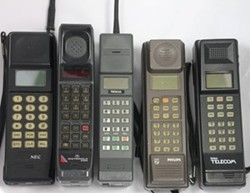
Socitm was born in January 1986 so join us as we get set for a celebration of our landmark year in 2026.
We hope you will at some point during 2026.
It’s not just a big deal for us, it’s a big deal for local public services. How much you’ve all done and how far we’ve all come since Socitm’s first year.
Throughout 2026 you’ll see us sharing things and people from our shared 40 years together and how your local public service community has supported and affected the communities around you.
Comforting and entertaining as it can be to look back, we’re concerned with now and what’s coming next:
Our focus remains firmly on strengthening leadership capability, supporting you through rapid technological change, and deepening our regional networks so that we can share insight and solve challenges together.
We know councils are operating under immense pressure, and we’re committed to equipping you with the knowledge, tools, and connexions that help drive better outcomes for your people and places.
Nadira Hussain, CEO of Socitm

The services you’re providing remain mostly unchanged. But how you’re doing them, thinking about them, and approaching them is vastly different.
Our journey in technology
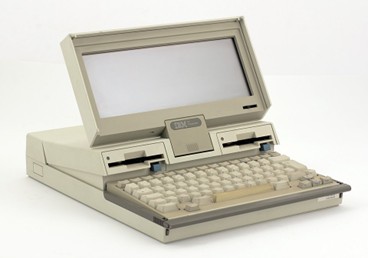
The first laptop, IBM’s PC Convertible was launched in 1986.
A membership group focusing on using technology chose a good to year in which to form.
We asked Copilot [could we even have imagined an AI assistant 40 years ago?!] to compare it and a modern smartphone [mobile phones were of course around in 19861 😉 ]:
IBM PC Convertible vs a modern smartphone: key specs
| Category | IBM PC Convertible | Modern smartphone |
|---|---|---|
| Release year | 1986 | 2023-2025 |
| CPU | Intel 80C99, 4.77 MHz (16-bit) | 64-bit ARM SoC, multi-core ~3-4GHz |
| RAM | 256 KB (up to 640 KB) | 8-16 GB |
| Storage | x2 750 KB 3.5 floppies | 128 GB to 1 TB flash |
| Display | Monochrome LCD 640×200 | OLED/AMOLED ~FHD+, touch 60-12 |
| Connectivity | Optional modem; RS-232/ no WiFi/BT/GPS | 5G, WiFi 6/7, BT, NFC, GPS |
| Battery | NiCd ~8h light use | Li-ion; fast and wireless charging |
| Weight | ~6kg | ~200g |
| OS | MS-DOS | iOS/Android |
It’s an ideal example of Moore’s Law in action. And we’ve lived through it!
Moore’s Law Basics

Proposed by Gordon Moore in 1965, it states that the number of transistors on a chip doubles approximately every 18–24 months, leading to exponential growth in computing power.

This trend historically resulted in faster CPUs, more memory, and lower cost per transistor.
Moore’s Law has transformed our experience of technology from something rare and deliberate to something constant and seamless.
In 1986, computing meant lugging a 6 kg laptop, loading programs from floppy disks, and working offline in text-based environments.
Today, thanks to exponential increases in transistor density and processing power, a smartphone in your pocket delivers instant access to global networks, AI-driven features, and rich multimedia experiences.
What once required a desk and thousands of dollars is now lightweight, affordable, and woven into everyday life.
Bringing it back to the now
We are building on our proud history and heritage to celebrate but very much to call on as we look forward to what the future holds.

The future will be the focus in London for President’s Conference 2026 on Tuesday 9 and Wednesday 10 June.
A moment to come together, look ahead and celebrate 40 years of public service innovation.
Thank you for your continued support and resilience.
Here’s to the next chapter of our shared journey.
- Handset models from 1986 courtesy of Mobile Phone History ↩︎